合并K个有序链表
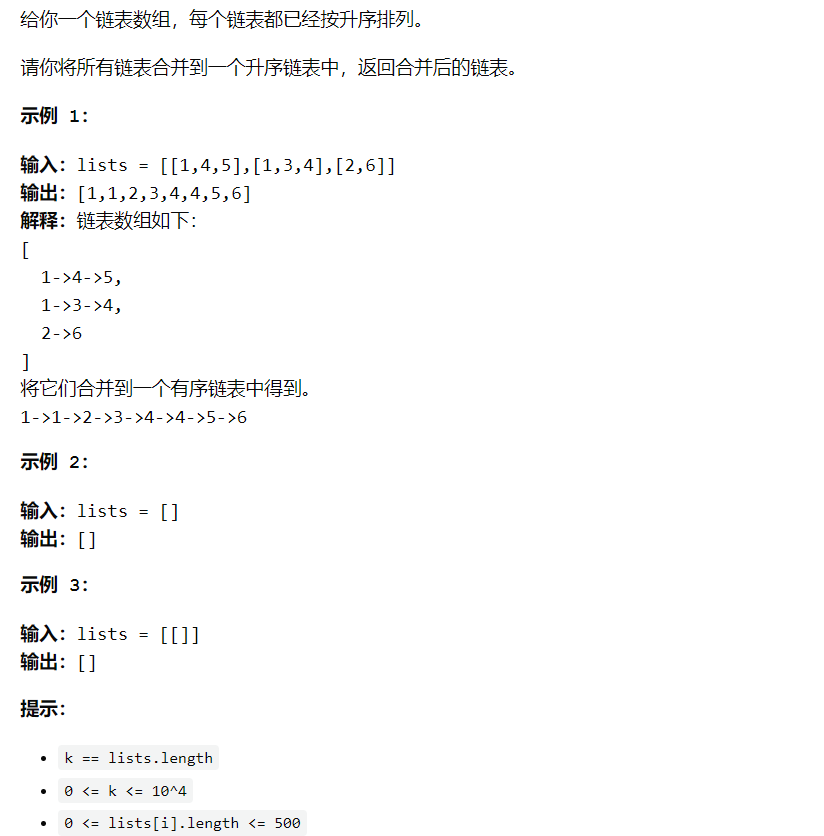
合并 k 个有序链表的逻辑类似合并两个有序链表,难点在于,如何快速得到 k 个节点中的最小节点,接到结果链表上?
这里我们就要用到 优先级队列(二叉堆) 这种数据结构,把链表节点放入一个最小堆,就可以每次获得 k 个节点中的最小节点:
//给你一个链表数组,每个链表都已经按升序排列。
//
// 请你将所有链表合并到一个升序链表中,返回合并后的链表。
//
//
//
// 示例 1:
//
// 输入:lists = [[1,4,5],[1,3,4],[2,6]]
//输出:[1,1,2,3,4,4,5,6]
//解释:链表数组如下:
//[
//  1->4->5,
//  1->3->4,
//  2->6
//]
//将它们合并到一个有序链表中得到。
//1->1->2->3->4->4->5->6
//
//
// 示例 2:
//
// 输入:lists = []
//输出:[]
//
//
// 示例 3:
//
// 输入:lists = [[]]
//输出:[]
//
//
//
//
// 提示:
//
//
// k == lists.length
// 0 <= k <= 10^4
// 0 <= lists[i].length <= 500
// -10^4 <= lists[i][j] <= 10^4
// lists[i] 按 升序 排列
// lists[i].length 的总和不超过 10^4
//
// Related Topics 链表 分治 堆(优先队列) 归并排序 👍 1598 👎 0

import java.util.PriorityQueue;
import com.linklist.ListNode;
//leetcode submit region begin(Prohibit modification and deletion)
/**
 * Definition for singly-linked list.
 * public class ListNode {
 *     int val;
 *     ListNode next;
 *     ListNode() {}
 *     ListNode(int val) { this.val = val; }
 *     ListNode(int val, ListNode next) { this.val = val; this.next = next; }
 * }
 */
class Solution {
    public ListNode mergeKLists(ListNode[] lists) {
        if (lists.length == 0) {
            return null;
        }

        // 虚拟头结点
        ListNode dummy = new ListNode(-1);
        ListNode p = dummy;

        // 优先级队列-最小堆
        PriorityQueue<ListNode> priorityQueue = new PriorityQueue<>(
                lists.length, (node1, node2)->{
            return node1.val - node2.val;
        });
        for (ListNode head :
                lists) {
            if (head != null) {
                priorityQueue.add(head);
            }
        }

        while (!priorityQueue.isEmpty()) {
            ListNode node = priorityQueue.poll();
            p.next = node;
            if (node.next != null) {
                priorityQueue.add(node.next);
            }
            p = p.next;
        }

        return dummy.next;
    }
}
//leetcode submit region end(Prohibit modification and deletion)
优先队列 pq 中的元素个数最多是 k,所以一次 poll 或者 add 方法的时间复杂度是 O(logk);所有的链表节点都会被加入和弹出 pq,所以算法整体的时间复杂度是 O(Nlogk),其中 k 是链表的条数,N 是这些链表的节点总数。
转载请注明来源,欢迎对文章中的引用来源进行考证,欢迎指出任何有错误或不够清晰的表达。可以在下面评论区评论,也可以邮件至 jungle8884@163.com